
Et Tu, Keir?
Keir Starmer, Joe Biden, and the Myth of Decency


Most of what has been written about the now-departing Keir Starmer goes something like this: Keir Starmer was a good and decent man in a job where goodness is seen as weakness and decency as fecklessness. In a more enlightened time, with a political environment that favored legislative results over ideological rigidity, a man like Keir Starmer would flourish. Now, as the thinking goes, Starmer was out of his element. His stubborn refusal to play the games of modern politics meant his leadership—and, by extension, Labour itself—were trampled by the right-wing rage machine of Nigel Farage and his insurgent Reform UK. Now, as Manchester Mayor Andy Burnham trained south to London, Keir Starmer had lost. A tragic hero beset by his own dignity and humility. Or so it goes.
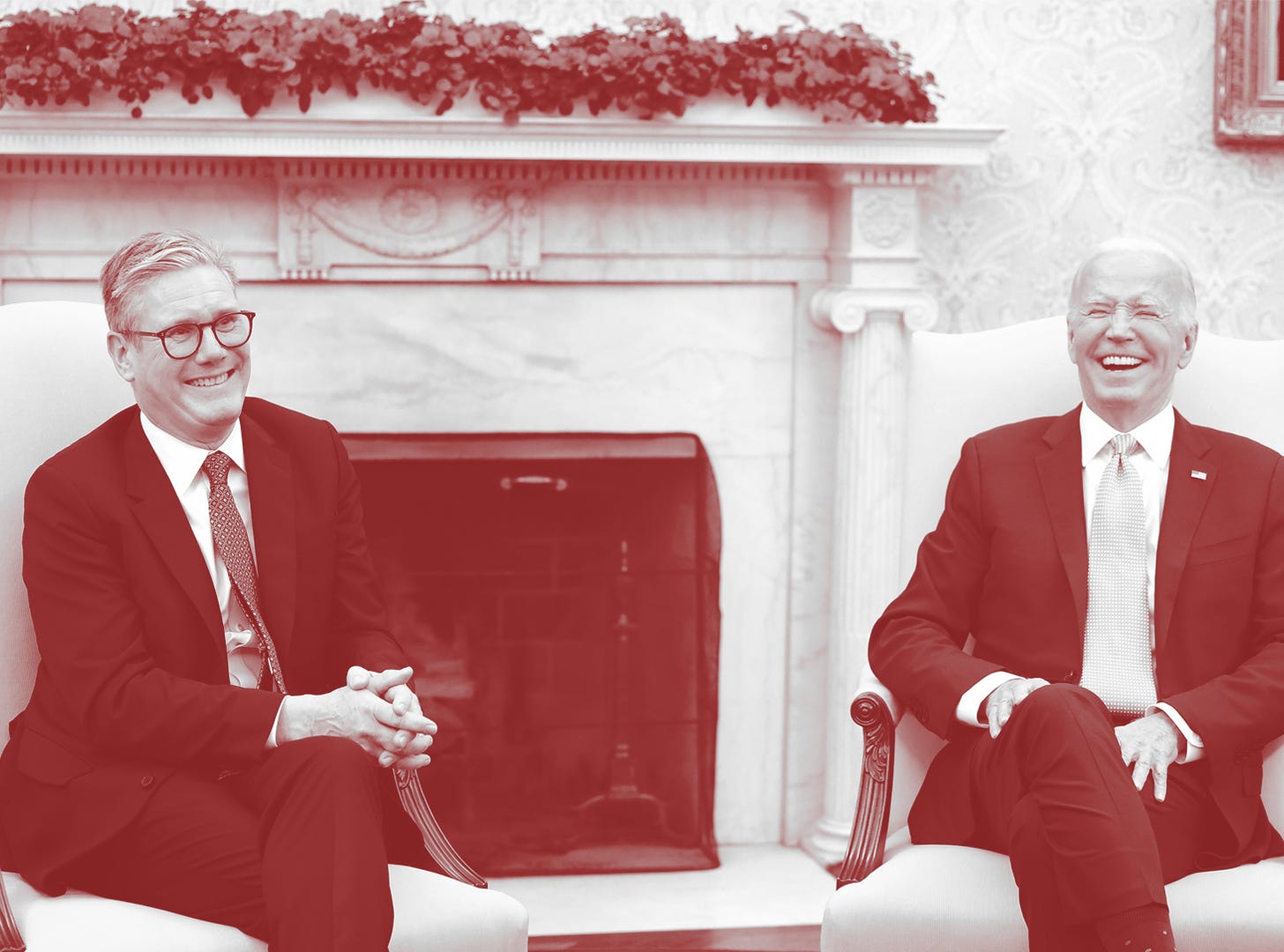
If this narrative reminds you of a certain geriatric American president, you would not be alone. Like Keir Starmer, Joe Biden’s eventual resignation as the Democratic Party’s nominee prompted breathless coverage from the commentariat about how earnestly decent the head of America’s liberal party was. Ignored in these political obituaries was the obvious fact that Joe Biden, like Keir Starmer, had not come to the decision to resign independently or proactively. Both Biden and Starmer buried their heads in the sand in an attempt to drown out the noise from the voters who elected them and the representatives who served them. Only after every ally had defected would these two ostensibly decent men put down their swords and surrender to what had been a political certainty months before.
The real tragedy in the fall of Prime Minister Starmer and President Biden was never that two men faced the consequences of their incessant selfishness. That is politics in a democracy. It is that the world’s foremost liberal parties have become so broken and brittle that men like Joe Biden and Keir Starmer are able to hang on to power for so long at all. That political movements that fought and bled for the disadvantaged and disenfranchised now cower in the face of a far right that aims to maim liberalism. That, most of all, we have confused humility with a hunger for power and decency with a denial that the left can do big things again.
Those of you who pay attention to UK politics will remember what is now seen as the beginning of the end for Keir Starmer’s tenure: the winter fuel allowance debacle. Shortly after entering office in July 2024, Starmer’s office would announce that the stipend seniors in the UK received to help with heating costs would be restricted to pensioners who received other welfare benefits. In other words, the allowance would be sent to those who needed it and withheld from those who did not. To Starmer, this was the exact move that voters had wanted out of Labour—a way to shrink the budget deficit with a scalpel instead of a hatchet. To the public, it was a betrayal of the most vulnerable and a backstabbing of Labour’s message coming into the election.
Starmer would burn enormous political capital only to end up walking back most of the allowance cuts. Even the original reduction would only save roughly 450 million pounds a year—roughly 2% of the deficit Starmer aimed to close. It was the type of political disaster that made Starmer’s reputation as an ordinary man thrust into an extraordinary position strangely stronger. A normal politician—the slimy, vote-for-my-bill-favor-for-your-friend type—would never make such a silly mistake! Right? What else could explain Starmer’s aimless leadership other than a bedrock morality that expected too much of the general public? You will notice that the onus of responsibility in this narrative is not on the esteemed and educated public servant but instead on the lowly, primitive voter.
This is the same line of thinking that allows our liberal parties to become insulated pockets of individuals in pursuit of power. It is what has led both Labour and the Democratic Party to treat winning elections as the end and not the beginning. This is wrong, destructive, and why the populist right is so successful. Behind our veneer of equality, the public can see plainly that our liberal parties have become engines of professional development for a select few. Men like Donald Trump and Nigel Farage, for all their innumerable faults and moral depravities, lead parties that bring the rage of their base into their politics. Our liberal wings can do this too, and we must.
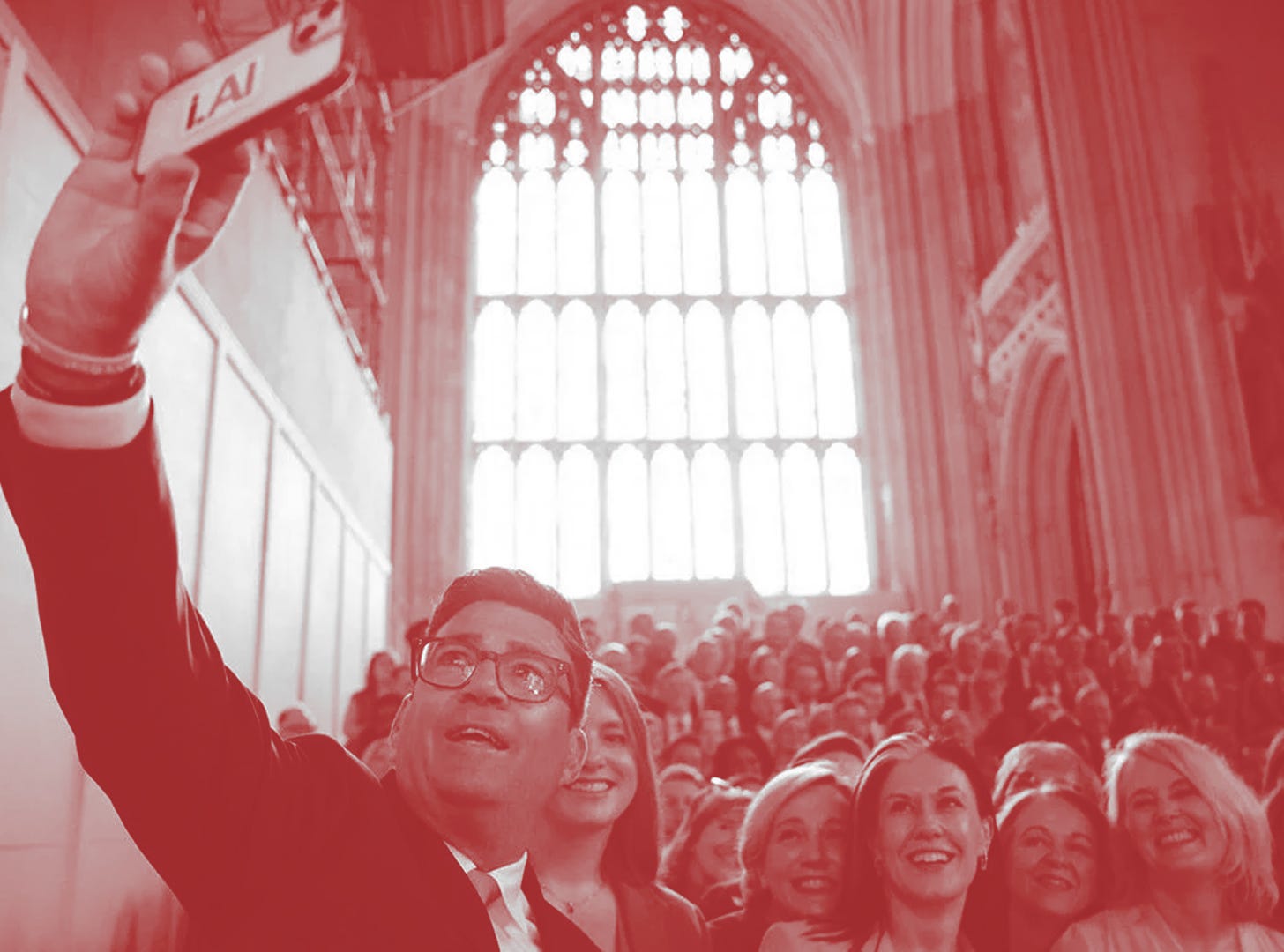
Manchester Mayor Andy Burnham is not Kamala Harris. Burnham is a proven winner and proficient communicator—someone who can still bring the change Labour promised. Burnham also has the benefit of time, with years to go until he is forced to call an election. If Burnham is willing to be the stalwart of the common man and his common values, he can and will succeed. As threatening as the far-right nativist politics of Nigel Farage are, they are not without baggage. Chiefly, Reform is inexorably tied to Farage and, by extension, beholden to the public opinion of a man with more than a few skeletons in the closet. Take the most recent example of Farage’s undisclosed five-million-pound gift given shortly before he joined Parliament—a scandal that threatens to diminish Reform’s steady rise in general election polling.
It would be a mistake to view Farage’s financial impropriety as a unique aspect of his career or party. Corruption is ingrained into the far-right populist politics of the moment, as our current president shows every day. Here again is where our moribund liberal parties cannot rise to the occasion if we continue to say little and stand for even less. Voters can see that the corruption Farage and Trump engage in—while hideous—is not all that different from Senator X trading stocks or Representative Y voting for a bill that their corporate backer wants passed. That is corruption too.
Too much of the infighting in the liberal wings of our parties is on policies and not principles. Principles come before policies, and we must place a greater emphasis on why you are coming to the decisions you come to rather than what those decisions are. Pundits call this authenticity, but I call this being a human being. It’s why a prison-rejecting, border-denying, interracial-marriage-questioning candidate just beat the head of the Congressional Hispanic Caucus in New York. As insane as that ideology may be—and it is, to be clear, insane—you have to give voters a better option than the political equivalent of a 2004 Honda Pilot with a new paint job and one of those insertable Bluetooth radio plug-ins.
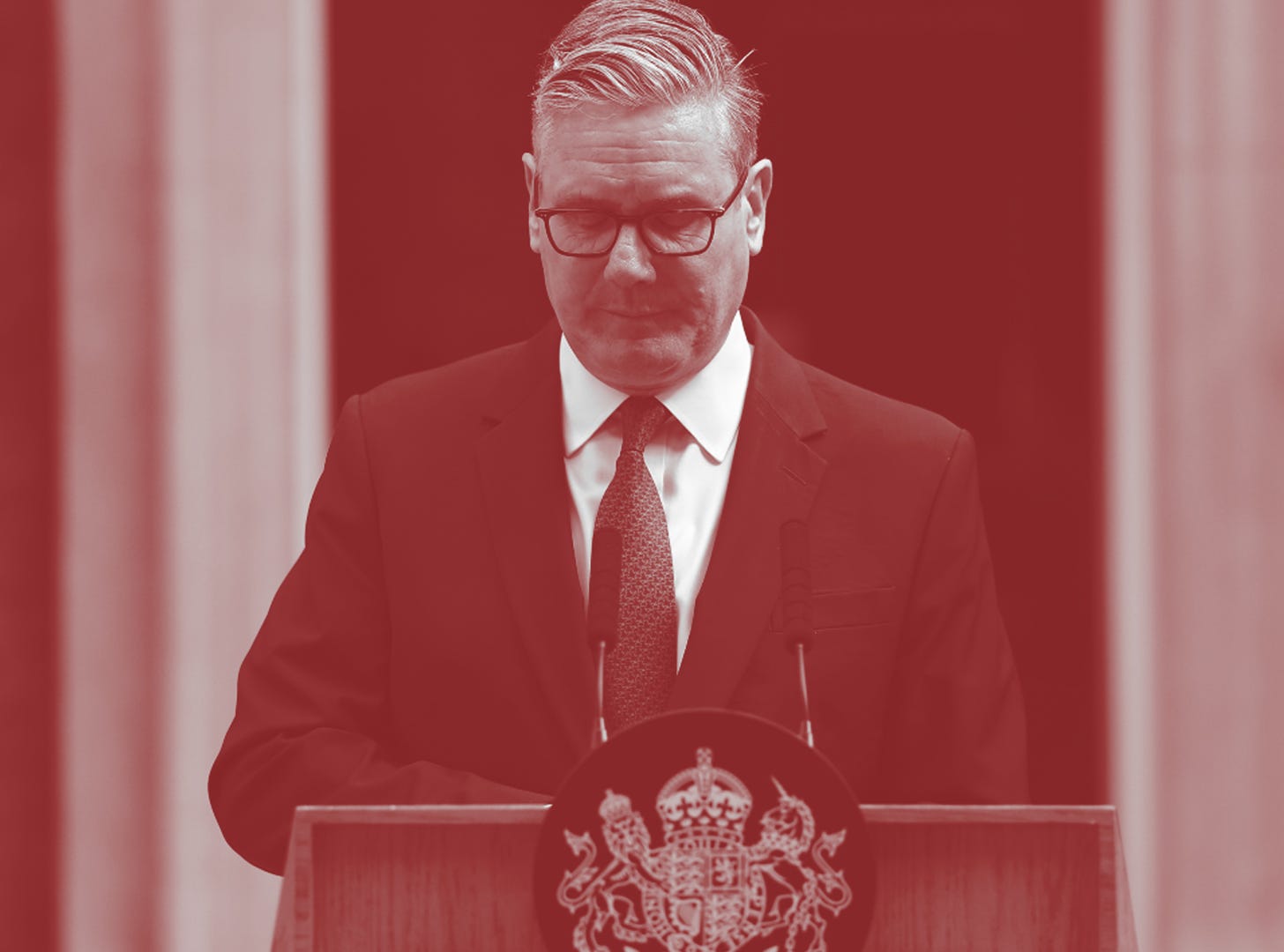
I am sure that Keir Starmer is a devoted husband and stand-up father. I do sympathize with the idea that Starmer was a victim, and not a perpetrator, in his political downfall. Maybe if I had not grown up in the era of Donald Trump and his repugnant and repulsive rhetoric, I would be able to understand the sympathy afforded to Starmer more deeply. Maybe.
What I do understand is that we are in a time of profound danger—for our world, our country, and our party. The more we in the center reject the demands of our voters and deflect the expectations of the country, the more we will lose power and shrink in relevance. Let us shed ourselves of quips about how we are the “Party of Manchin to Mamdani” or the belief that voters don’t actually care about ideology. Let us revel in this current political moment such that when we go to bat for healthcare, for conservation, and for an end to war in all its forms, we are as forceful as we are fearless. Then, and only then, will we rise victorious in this fight over the future.