On "It"
Wrestling with the inhibition of ambition


For almost my entire life, I’ve wanted nothing more than to be grown. Grown enough to where if I walked into a room, my ideas would be the thing that was challenged. Not the way I looked, or the shrill treble of my adolescent voice. Just me. I never understood why the merit of my thoughts could not overcome the mouth that expressed them. Why should it matter how old I was if I had something genuinely useful to add? Would I really have to wait five, ten, fifteen years until I could exercise the potential I felt so deeply I had?
There is, ultimately, only so much you can do before the two-digit number hovering over your head gets in the way. Some of this is statutory—my goal of being a Senator at thirty, or President at forty, is still over a decade, at least, away. There is nothing I can do, save for staying alive, that will do much of anything to make this wait any faster. In many ways, I am grateful for such a limitation. I am someone who will always, instinctively, want to put the pedal to the metal. I want to go, go, and go until I have either completed what I set out to do or I have surrendered to it completely. If there is anything central to my sense of self, it is this undeniable fervor to do more and more work.
Although, even the word “work” always fails to capture my relationship with it. I love working! I love to learn about the things I am interested in, and I doubly love to find a way to put my own feelings and thoughts inside of them. That may be why I have always had such a magnetic attraction to the humanities—particularly politics—and why I’ve also felt so terribly uninterested in the natural sciences. The natural sciences, with their defined formulas and equations, always felt so limited. I felt boxed in, powerless, and, most dreadfully of all, bored! I knew that I would not be an engineer, or a physicist, because I could not possibly surrender myself to it in the way I could for politics.
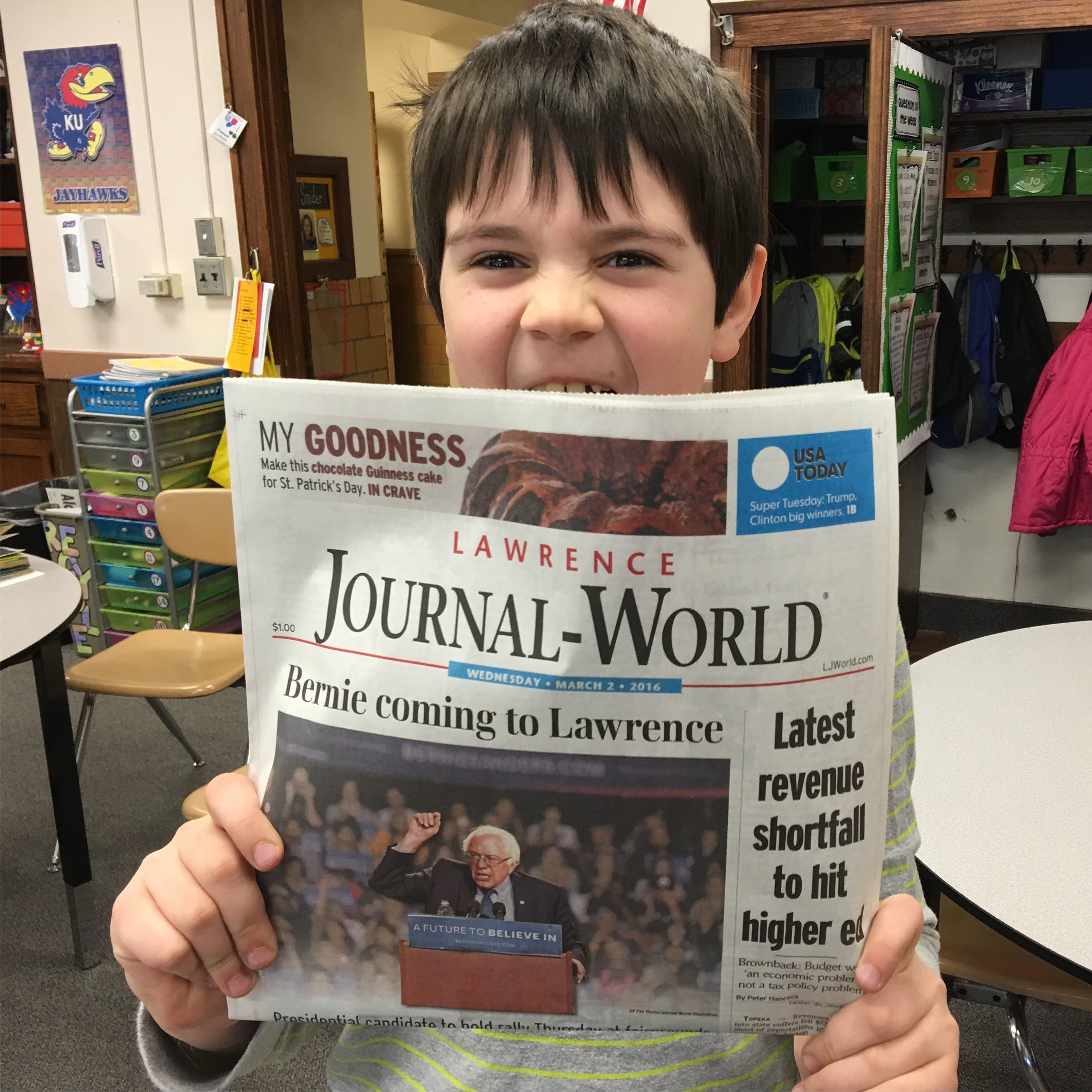
Politics, though, challenged me. There will never not be a part of me that is amazed that ideology is even real. Real in the sense that one person can believe—know deep inside themselves—that the world is not working the way it should. Real enough that with this certainty, one person could transform a nation into something grander. Something that would outlast one man, or one idea, but would become the foundation of life for every man, woman, and child. That is something that, to this day, still inspires a tremendous awe in me.
It could be that feeling of awe that tempers my subconscious’s unrelenting urgency—that allows me to accept those institutional barriers to power. Rarely ever do I consider the fact that I am nineteen, and to be honest, I see no reason to. What good does it do to chain yourself to the expectations of another? What fun is it to lay in the mud of youth? You might argue that there is a certain freedom that comes from just being nineteen. Society expects nothing of you, other than that you will, eventually, grow up. With time you will have a job, then a partner, then a family, and then your freedom in your twilight years. I don’t hold judgement for this lifestyle, but I won’t pretend it makes any sense to me. I want to do everything, and I want to do it now!
I think what I find so foreign about this path is that it assumes there are two selves: a youthful, free-spirited one, and a realist, rational one. These two selves can never meet in the light—you must either be enjoying the fruits of youth or planting the seeds of adulthood. This is the great disservice that living to your age does. It rips apart your sense of self—dissects it into tiny pieces for each stage of life—and in doing so robs you of the full totality and unpredictability of life. You feed from a trough of low expectations and laziness until, one day, you find that you can no longer dive your mouth into the basin. You are twenty-four and have no idea what you want out of this life.
You may think such a message is abrasive or naive. I would argue, though, that I am asking for a very simple thing: to know yourself. There’s a certain fear that I’ve slowly realized so many young people have towards asking oneself what they want in life. They squirm and sidestep—their body physically ejecting the concept of looking at their life from the outside. I worry that this ignorance, however much a function of their place in life, has lifelong repercussions. They are thrown into the world without knowing why they feel the feelings or think the thoughts they have.
It’s important to remember that you can hold contempt for a societal misgiving while also holding empathy for those trapped inside of it. A sneering elitism is, I’ve often found, covering for the same lack of meaning that the less accomplished face. There is no substitute for meaning—not awards, not money, not titles. Meaning is the only thing in this life that can provide you with the certainty to dare to be great. Meaning, and meaning alone, can overcome the barriers of life that tell you that because you were born in X and went to school at Y, you can only ever be Z.
These are the barriers that I always hated with such a passion. Their informality was especially enraging to me. It felt like a punishment. A punishment that I had stepped out of line in a march that would tell me what I would do and what this world could be. I refused to march. I still refuse. As much as I would like to pretend this was some grand philosophical battle, or inner conviction of what would be right, the reality was much simpler: it made no sense. It made no sense that I should be governed by meaningless mediocrity. It made no sense that someone else could tell me what I could or could not do, or when I could or could not do it.
This is something that I always battle with when writing about ambition—if having “it” is something I had particular control over. I realize that my situation is unique. I’ve known what I wanted to do since was in third grade, and I’m aware of what it means to get there. I am the son of two brilliant parents. I had a wonderful childhood where I was encouraged to learn. I was challenged intellectually in school. To ignore this is to engage in the type of narcissism that the worst leaders, and most naive young people, live in.
But there is also a part of me that feels undeniably self-created. Something in me that instinctually flinches towards trying, and inevitably sometimes failing, for more. It allows me to be certain that I will, with good work and a kind heart, be so much for so many. It is what supersedes the barriers, both informal and formal, that govern so much of our lives. It is what, I believe, will allow me to keep the youthful energy of no expectations with the unadulterated strive to become great. I think we should all strive to maintain this synchrony.
I was born on July 4th, 2006. Nineteen years, five months, and five days by the time this is published. Sometimes, if I am to be honest, I like to believe it is anything other than chance that I was born on the birthday of a country I believe I will lead. A sick country saved by its son—born and inexorably tied together. It’s a nice thought. A cynic would say this is the logical endpoint of my endless wanting for more—that only by reaching the summit could I see the futility of the trek. They would be wrong, I think. My wanting to be more is to show, through force of will and earnest effort, that anyone can be great—that you hold the key to the shackles of expectation chained across your ankles.