

The Bombs Over Minab
On the children of Shajareh Tayyebeh girls’ elementary school and the people of Pontiac, Michigan

The body of the UGM-109 Land Attack Missile is a hefty mix of aluminum alloys and graphite epoxy plastic. Its fuselage and wings are forged from a lightweight alloy that lets the missile survive the nearly 600 pounds of thrust erupting from its turbofan engine. When fully operational, the UGM-109 weighs over three tons, boasting a wingspan of nearly eight feet and a height more than twice that. The warhead payload—the part that makes the missile a missile—can carry a thousand pounds of explosives. Upon impact, the missile can demolish structures and leave heaping craters of dust and debris up to twenty feet in diameter. Most of us know the UGM-109 Land Attack Missile by its nickname, the Tomahawk missile.
The Tomahawk missile is a testament to the incredible ingenuity of the American military supply chain. The missile is a complex piece of engineering requiring suppliers from across the country to produce and transport parts and components to Raytheon’s main production facility in the Arizona desert. That massive turbofan engine is produced by a facility in Pontiac, Michigan and owned by Williams International, an aircraft manufacturer. In East Camden, Arkansas, off Highway 274, Raytheon produces over 115,000 solid rocket motors a year, many of them destined for the dry Arizona desert where the Tomahawk is built. A more dangerous world has meant more work for the residents of little towns and hollowed cities like Pontiac and East Camden—places left behind over the last twenty years of globalization.
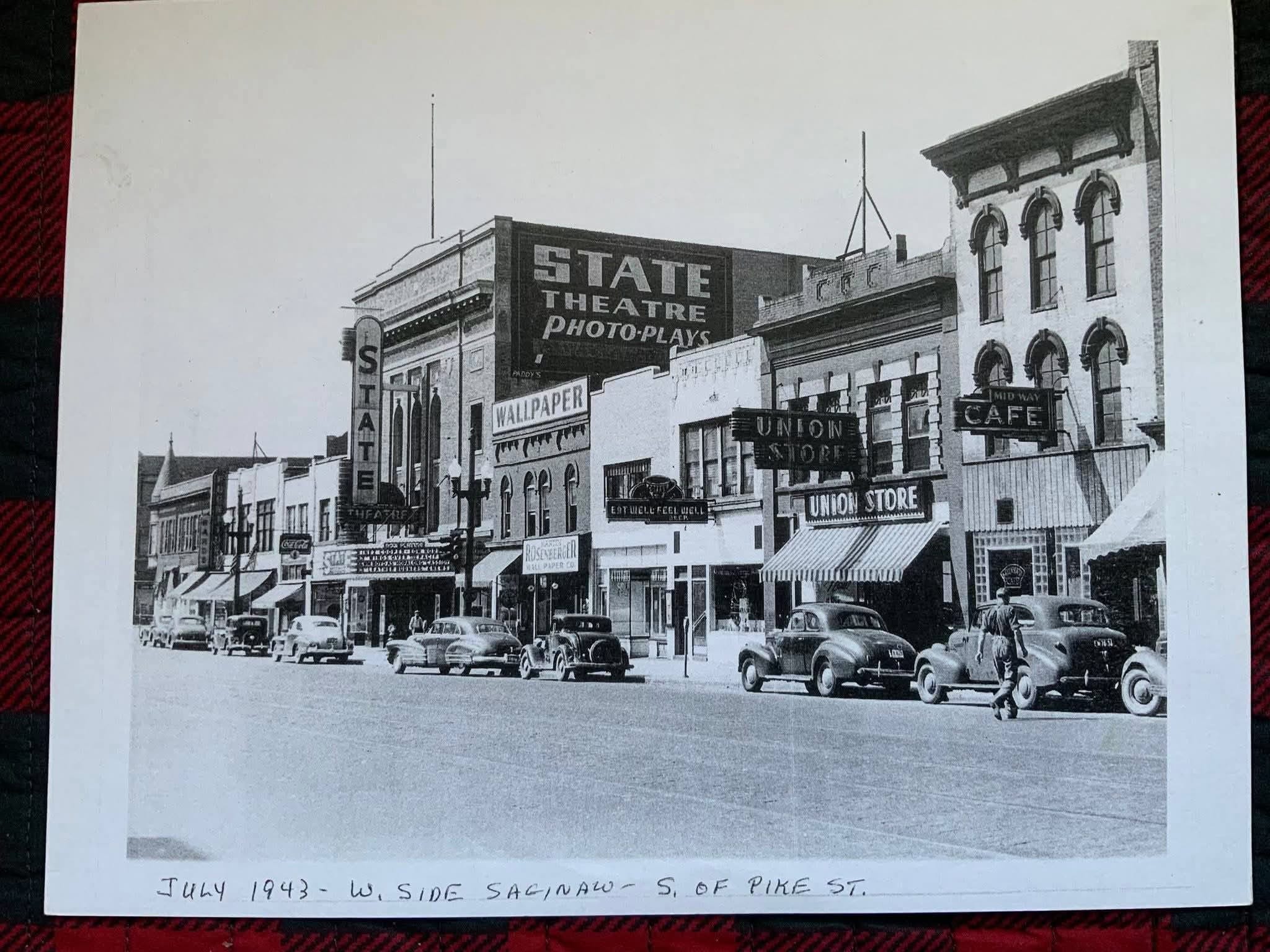
Take Pontiac, for example. In the early twentieth century, Pontiac was one of many small towns turned into bustling cities as automakers flocked to the Midwest. General Motors hired tens of thousands of workers, many of whom were coming home from service in the Second World War. For the following three decades, Pontiac would continue to grow in size and population, reaching almost ninety thousand residents in 1970. Pontiac though, like many cities in the region, would begin to experience a slow and painful decline. The hiring spree of automakers was slowing down, and even contracting, leaving a city that had become reliant on the growth of these companies to provide for its citizens. In 2001, Pontiac would see the Detroit Lions pick up and move their stadium back to the Motor City.
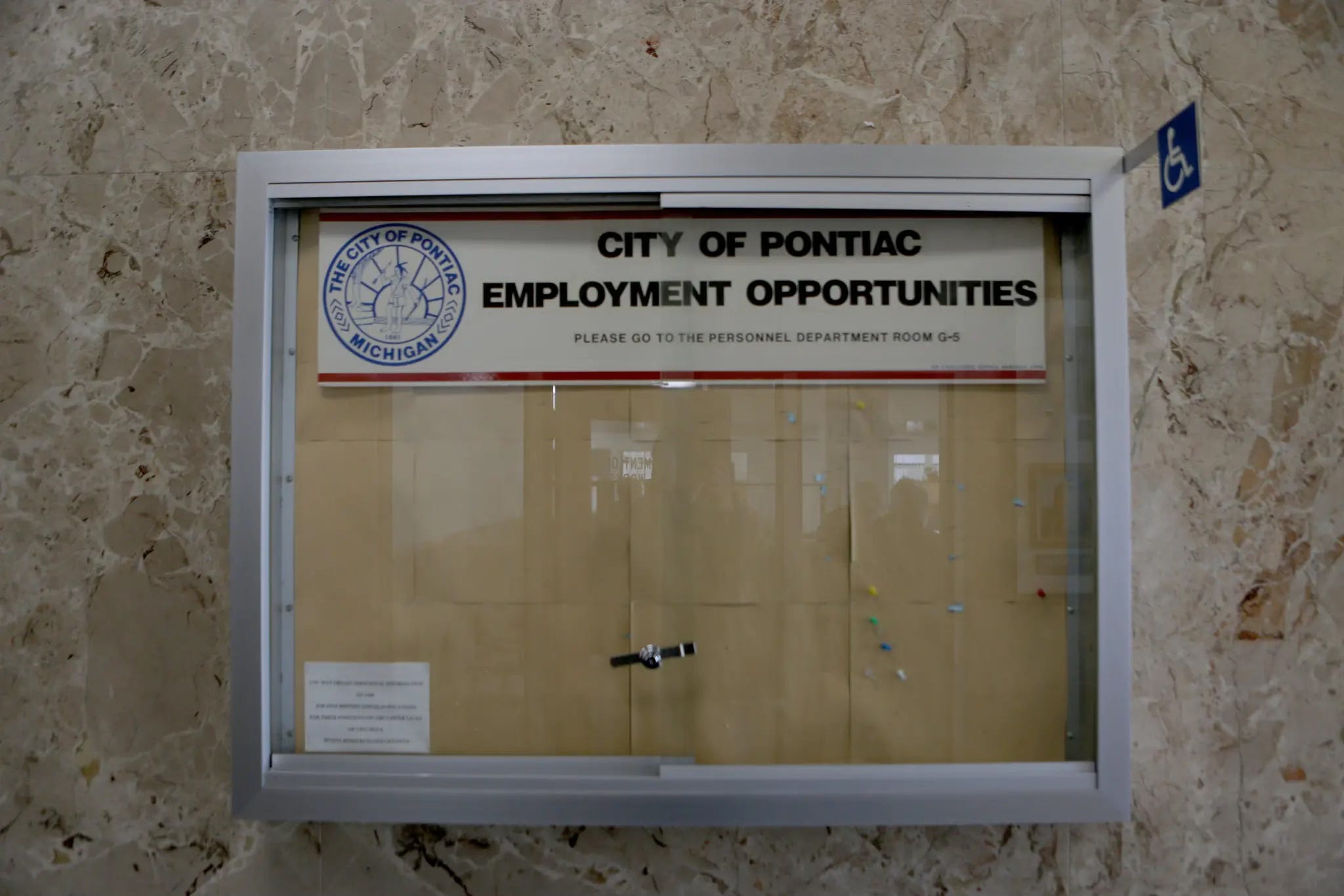
What had been a slow hollowing out from the inside became a rapid descent into financial catastrophe during the Great Recession. The city was placed under the oversight of an Emergency Financial Manager appointed by the state government. In order to balance the city budget, officials were forced to drastically revise contracts with local labor unions alongside a mass sell-off of city assets. The city was forced to sell assets like parking meters for pennies on the dollar. Pontiac sold its water treatment plant for a little over fifty million dollars, and outsourced its garbage collection. The city laid off over eighty percent of its workforce—going from six hundred employees to fifty—adding insult to injury for a region already deeply familiar with the concept.
There’s a reason you haven’t heard the story of Pontiac, Michigan: it isn’t unique. Pontiac is one of hundreds of cities turned to towns and finally crushed into husks—places smashed by the whims of the private sector and shrugged off by the political class. In 2016, it was places like Pontiac that helped deliver Donald Trump his shocking upset victory. Places that believed in his message that America had tried to do too much for too long, and had paid the price.
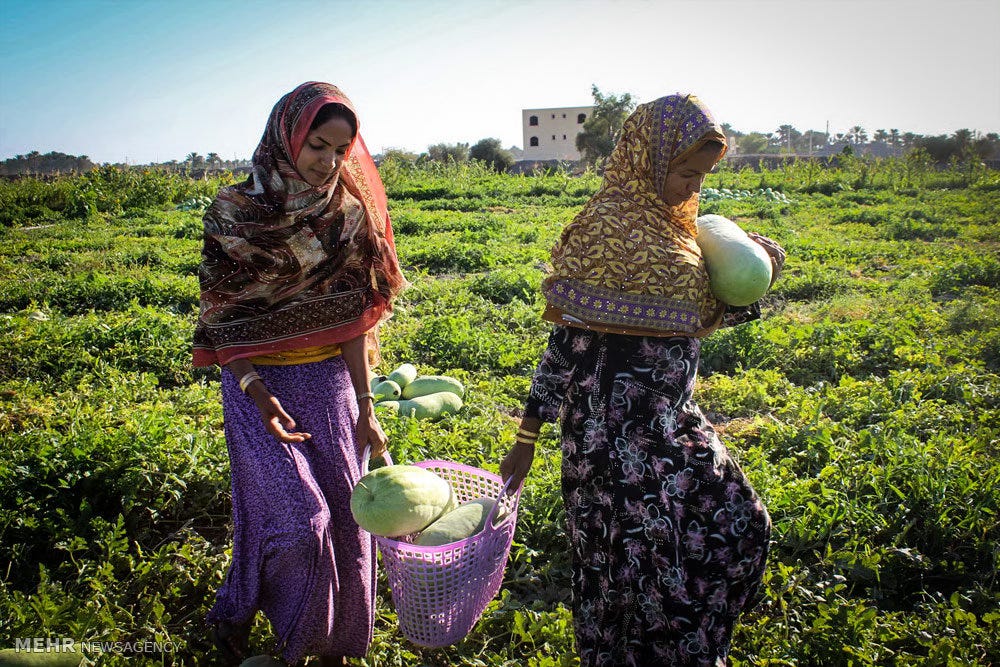
On the morning of February 28th, life in Minab, Iran went as it had every other day. Minab is a city in the Hormozgan province—a hot and dry region in the southeast—where roughly seventy thousand people live. Hormozgan is an area of enormous importance to the elite Iranian military unit known as the Islamic Revolutionary Guard Corps, or the IRGC. The region directly overlooks the Strait of Hormuz, a key chokepoint for the world’s supply of oil. That has made Minab a critical component of the IRGC’s naval operations, and subsequently a key target for U.S. and Israeli forces.
Up until 2016, the Shajareh Tayyebeh girls’ elementary school was another part of the sprawling IRGC operations in Minab. Near the end of the year, though, satellite imagery showed the compound was walled off, with new entrances created to allow for students to enter. A year later, a soccer pitch was constructed in the courtyard. The building itself was repainted with an image of pink flowers and green leaves, a reference to the school’s name of “The Blessed Tree” in Arabic.
The Iranian school week starts on a Saturday. Classes at Shajareh Tayyebeh started in the morning. Roughly 170 students and teachers were in the building this Saturday when news of American and Israeli strikes began to reach staff. The school called home to parents, telling them to come pick up their kids for an early dismissal. The war had begun.
The first UGM-109 Tomahawk missile hit the Shajareh Tayyebeh girls’ elementary school at approximately 10:45 A.M. The first missile did what Tomahawks are supposed to do, erupting in a fiery explosion, killing dozens of children upon impact. The school’s principal moved the remaining group of surviving girls into the prayer room and once again phoned parents pleading for them to pick up their kin. Then, another Tomahawk missile pierced into the prayer room. The principal and remaining children were killed. If any of the children did happen to survive the debris of a two-story building crushing down upon them, the third and final strike would have ended what little chance they had at survival. Over 170 people, almost all of them children who had yet to reach double-digits, were dead.
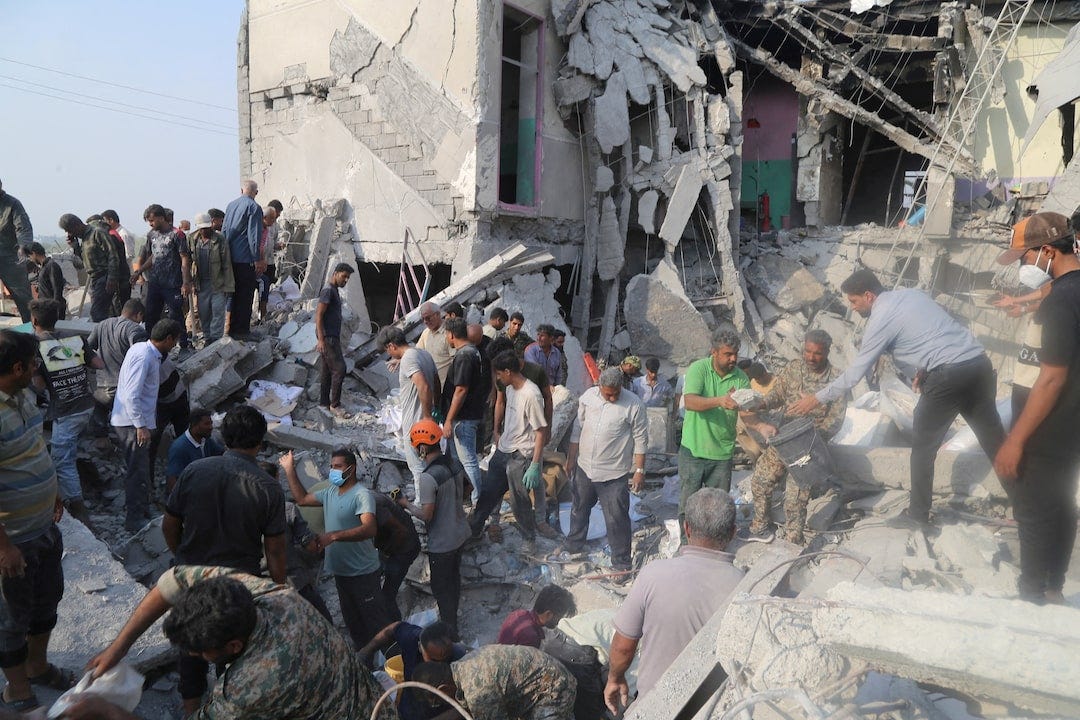
As parents slowly arrived at what had once been a safe space—a place even the horrors of war should not reach—their cries began to spread. The smoke was still rising from the thousands of pounds of explosives that had been laying into the building just minutes before. Those cries—of fathers and mothers who had no part in this war—are the same cries that reverberate across every conflict. It is the cruelty of war in its purest form, and the evil of violence left naked. Those children—most of whom would have no idea who the American President or Israeli Prime Minister that started this mess were—would become just another number.
Minab, Iran is not all that different from Pontiac, Michigan. Two cities, comprised of people overcoming economic hardship in the pursuit of a fairer life. Two cities wrapped up in the machinery of war, whose leaders had ignored their poverty up until it served a purpose. The people of Minab and the people of Pontiac are not complicit in the slaughter waged in their name. They did not ask for this war. The people of Pontiac are no better now that the bodies of the schoolgirls of Minab are six feet under. They are not safer, nor richer, nor healthier. Life will go on as it has for the last fifty years, surrounded by the husk of an America that looked within for its fortune and cared about its own more than anything else.
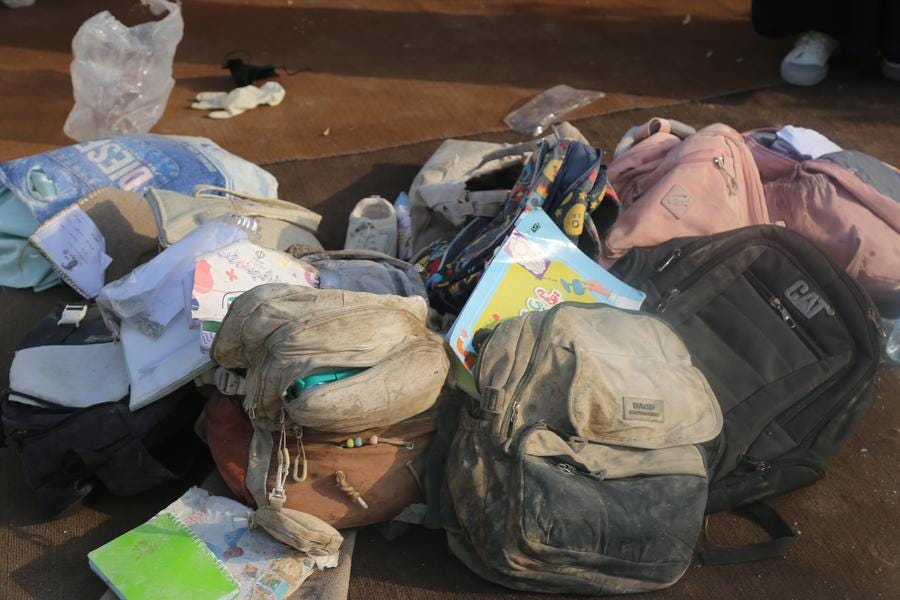
Life will go on in Minab, too. The parents of the little girls who had their whole life to live—to see an Iran of freedom and fairness—will remember the barbarism of the American military. They will still have the beds their girls slept in, and the clothes they would dress them in. They will still have to go to work the next day in a country with a worthless currency, watching the missiles made in Pontiac and East Camden light up the sky above them. Their lives will have to go on, even if they so wish it would not. Even if those parents of the Shajareh Tayyebeh girls’ elementary school wish every night before bed that it was the parents in Pontiac who suffered their fate. Only then, they must think, could one know how it feels to watch their child wave them goodbye before school only to see that same arm poking through a mess of concrete and rubble.
There can be no common American purpose if we are spending a billion dollars a day fighting another country’s war while places like Pontiac have to pimp out their parking meters out to stay afloat. That billion dollars a day should be going to new parks in Pontiac, to treatment facilities for the tens of thousands of addicted and afflicted victims of a drug shipped from China, produced in Mexico, and sold on our streets. But it won't. It will still be tiny towns like Pontiac dotting the country, watching a geriatric old man or woman shooting a short-form video about "affordability." Every four years a man or woman will stop by for a few hours and talk about how they aren't a politician—how they are the ones that will finally bring change.
Every day in between, a few hundred people will get in their cars and drive to the Williams International facility. They’ll go to work assembling those massive turbofan engines. They’ll come home tired after a long day’s work. As the blue LED of their phone shines on their face, they might read about how American forces are bombing some poor country a thousand miles away. While they scroll, they might see a few grainy videos of bright lights shooting down onto a tan landscape. Maybe they will even see the aftermath of such a strike—the same screams the parents in Minab had when they knew their child had been buried and burned alive. At some point, though, they will turn off their phone they lease, in an apartment they rent, laying on a mattress they financed, and go to sleep.
Quite a moving way of weaving stories of these two far away cities together