Ukraine Deserves Peace
The fruitless fascination of fatality must end

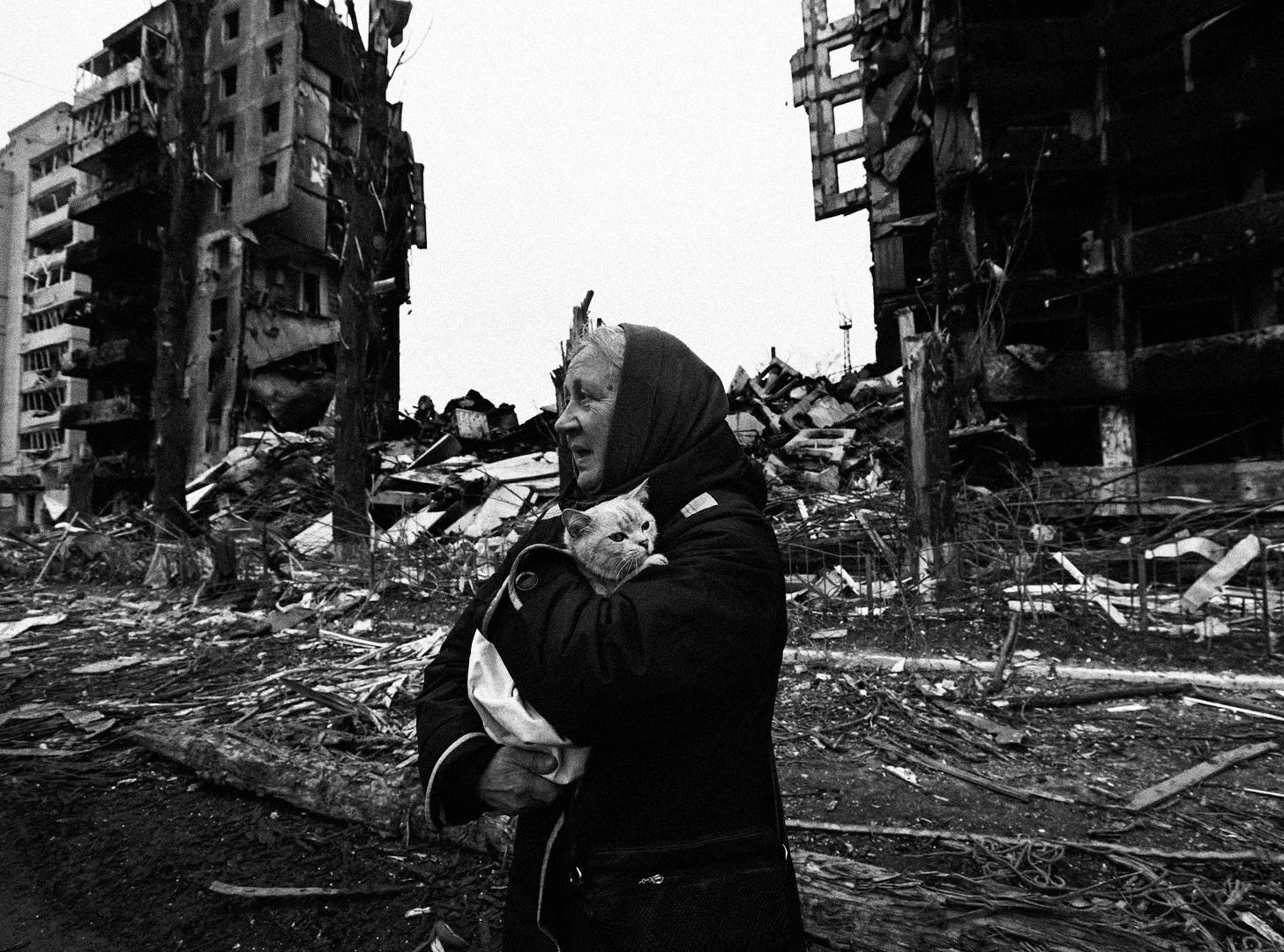
Young Americans, Europeans, Russians, and Ukrainians plead for peace in Ukraine. We plead to the generation of leaders who have promised us so much and delivered so little to act upon their most basic humanity. To see the reality of this horrible war as an act of incalculable suffering that must end, not as a pawn in the last moribund days of the contemporary international order. We refuse to sacrifice our futures and our families so that a few powerful men can profit in power and prestige from slaughter. The time has come for this class of elites to decide: are they willing to sacrifice their careers, and their countries, to the banality of fascism and totality of destruction in order to keep the slaughter going? Make no mistake, that is the path we are on.
If the far-right parties of Europe agree on anything, it is that the war in Ukraine has been a disaster for the average European—and they are right. The AfD in Germany, National Rally in France, and Reform Party in the United Kingdom all have promised to cut aid and prevent troop deployments in Ukraine. All three parties are expecting major gains in future elections, with the National Rally and Reform predicted to achieve outright majorities. The rise of these parties, according to the leaders of Europe, represent a fundamental threat to the post-war European order. Yet, at the same time, these officials refuse to do anything of substance to stop their rise. This begs the question: are these far-right parties truly the “extreme” threat that statesmen like Emmanuel Macron accuse them to be? Or is the threat extreme only to an agenda of endless war and unaccountability?
I, like many my age, view these parties to be a fundamental threat for a fair and free Europe. Like many my age, though, I do not hold much sympathy for the foreign policy of the last eighty years. Like many my age, I see the war in Ukraine for what it is: a tragedy that needs to end. A tragedy that, if left to its own devices, threatens to envelop our world in another, and perhaps final, world war. Keir Starmer and Emmanuel Macron may be safe in their bunkers with their families, but the average citizen does not get to enjoy the pampered protections of power. We are the ones who will be sent to die in a trench by a drone operated in Moscow. We are the ones who will face food insecurity and economic catastrophe from an economy in war-footing.
Let us, once again, quickly rid ourselves of the innumerable fallacies and accusations that those who defend this war propagate. Firstly, and most importantly, is the argument that the survival of Ukraine is a bellwether for a safe and secure Europe. Russia, operating in the role of a Marvel villain, will apparently march into Poland after suffering over a million casualties and taking only a quarter of Ukraine—that is unless Putin, in his Death Star hovering over the Kremlin, is stopped. Of course this argument, despite its endless recitation, is already proven false! Russia has been stopped. They have not marched into Kyiv and taken the country.
There is no doubt that Vladimir Putin is an evil man. Any leader who slaughters his own people is. There are, though, many evil men in this world living and dead. George Bush sent young men like myself to die in a desert. Benjamin Netanyahu used a national tragedy to advance his conquest over women and children in Gaza. Xi Jinping has cracked his totalitarian whip of censorship on the free people of Hong Kong and Tibet, and he looks to do the same in Taiwan. This is a world of cruelty and unfairness. That does not mean we should excuse such crimes—in fact the sole goal of any society should be to extinguish it entirely—but it should engender some basic rationality from all of us.
That rationality would make clear that despite his complete lack of morality, Vladimir Putin is not a dumb man. He is a leader, who like most every leader, holds inside a bottomless envy of the great men of history. That is what allows such a man to ignore his morality and make the reasonable assumption, which almost every major intelligence organization shared, that Ukraine would fall quickly and the West would, eventually, forget and forgive. When this assumption was proven demonstrably false, he pivoted. Putin understood that no matter how slow the victory, he outnumbered Ukraine in men and outproduced them in defense. He understood that the leaders of the West wore the mask behind which there was no face—that the drums of war would be too loud for the average American and European to ignore. He was right.
Accepting that such an evil man could astutely analyze a geopolitical reality is difficult. It is unfair, and I sincerely mourn for the Ukrainian people who have lost so much. It is out of that sympathy that I also see the false morality of those who claim that the 28-point-plan proposed by the United States is a complete surrender to Russia. This argument, which was promoted by legacy media outlets as well as many politicians, somehow argues that Russia, with the clear upper-hand, should be expected to take a deal that is less beneficial than continued war. Again, if you were to take the names of the countries and leaders, and explained the proposed peace plan in objective terms, no reasonable person would contest that the country with a clearer track towards victory would get a better deal than the country destined for defeat. Why that is controversial is a deeper more prescient question than endless posturing of “fairness” and “capitulation”.
Again and again the leaders of Europe have kicked and screamed when the Trump administration has pushed for peace. Peace is appeasement! Peace is surrender! Peace is inviting Putin to pause and re-arm! Yet, they never seem to offer another solution as to how Ukraine, with less and less men, and a smaller and smaller economy, can win this war. That is, obviously, because they do not have a solution. They only wish not to be embarassed at their dinner parties and galas. They believe, like every other aspect of their life, that the world they want is the world they should get. They are the chosen ones who future generations will compare to the giants of the early twentieth century, standing up against the forces of tyranny with a united populace behind them.
If the leaders of Europe continue to entrench themselves into perpetual war, and ignore the leadership of the United States, it would beg of us to reconsider why we sacrifice prosperity at home for their protection. The argument, as it has been said, is that by footing the bill for Europe we are securing enormous influence among a region that was for most of human history ensnared in endless internecine conflict. There is some truth to this argument, and the inarguable success of institutions like the European Union reflect this. Europe is richer, safer, and more powerful united than divided. Yet, this unification also came at a cost.
While European social democracies have enjoyed robust healthcare and infrastructure by not paying their defense bill, America has suffered. We have watched our cities become infested with drugs and overcome by homelessness, our people battered and beaten by exorbitant healthcare costs. Again, the argument for this trade was that American leadership in Europe outweighed the harm at home. We should, then, expect Europe to understand that as a result of this endless support we have the right to enact our vision of the continent. We have the right to expect that when an American President pushes for peace, that Europe gets in line behind us. Such an expectation has been brutally rebuked.
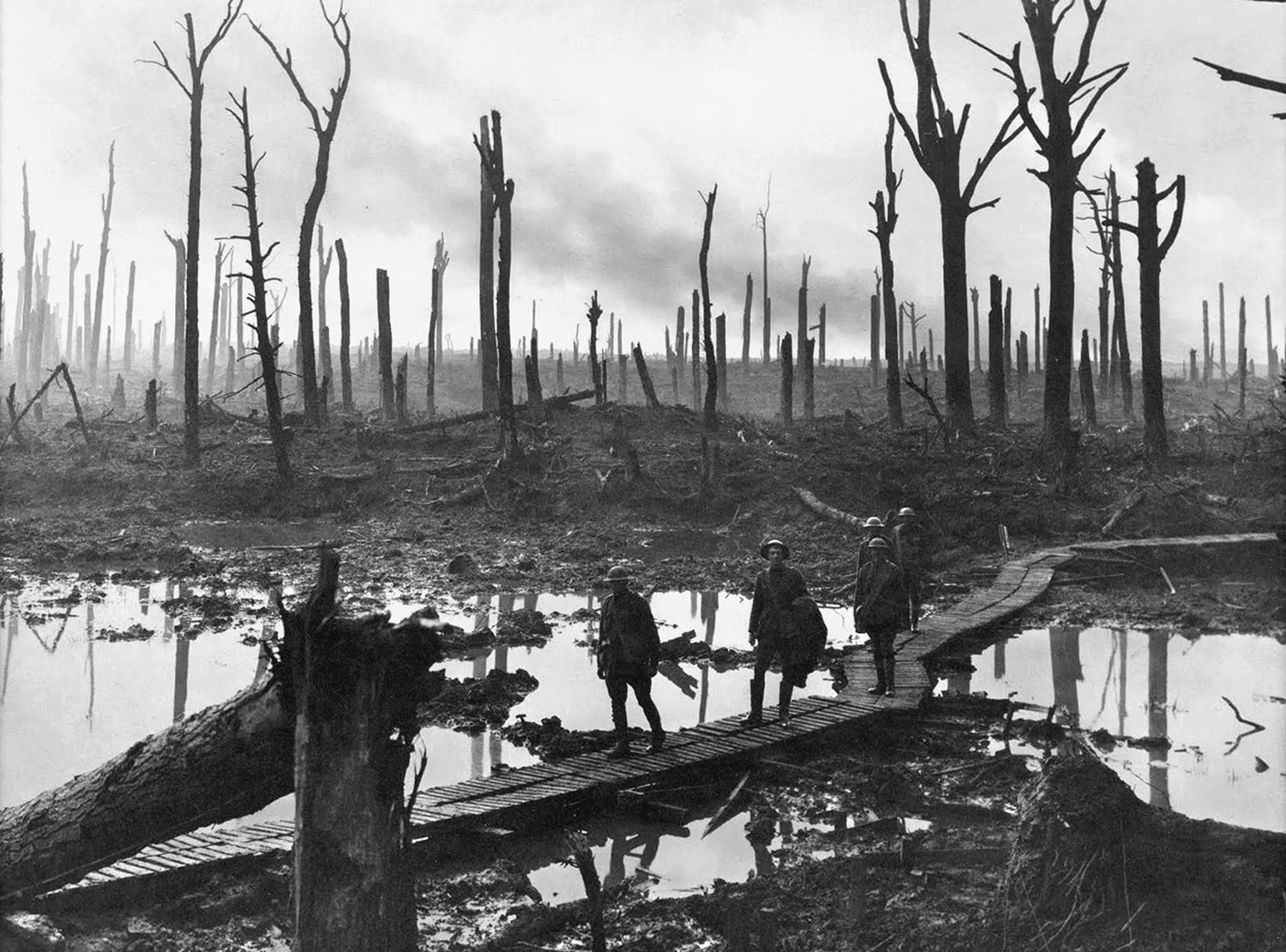
If the United States does not act, radically and rapidly, to push this war into a peace, we will continue to risk another great war. This war will not be the one that these leaders across the Atlantic dream about when they lay their heads at night. There is no Churchill waiting to organize Europe, nor is there a Hitler hell-bent on worldwide domination to unify against. Instead we look to be repeating the first World War—the war ignored by history because it was about no ideology and no fight for freedom, just the legacies and lives of the unelected elite. It erupted out of an ignored tension, expanded by ignorant leadership, and only extinguished after incomprehensible bloodshed.
Twenty million died in that war. Twenty million men who would have been fathers of children and sons of the nation. Twenty million young boys who did not have the wealth to escape conscription and who believed that their leaders would protect them. Twenty million mothers and fathers, sisters and brothers, who would watch their blood leave and never return. That is why we push for peace in Ukraine, and in Gaza, and in every corner of this Earth where blood is spilled.