

We Cannot Give Up on American Cities
Rising disorder demands compassionate conviction

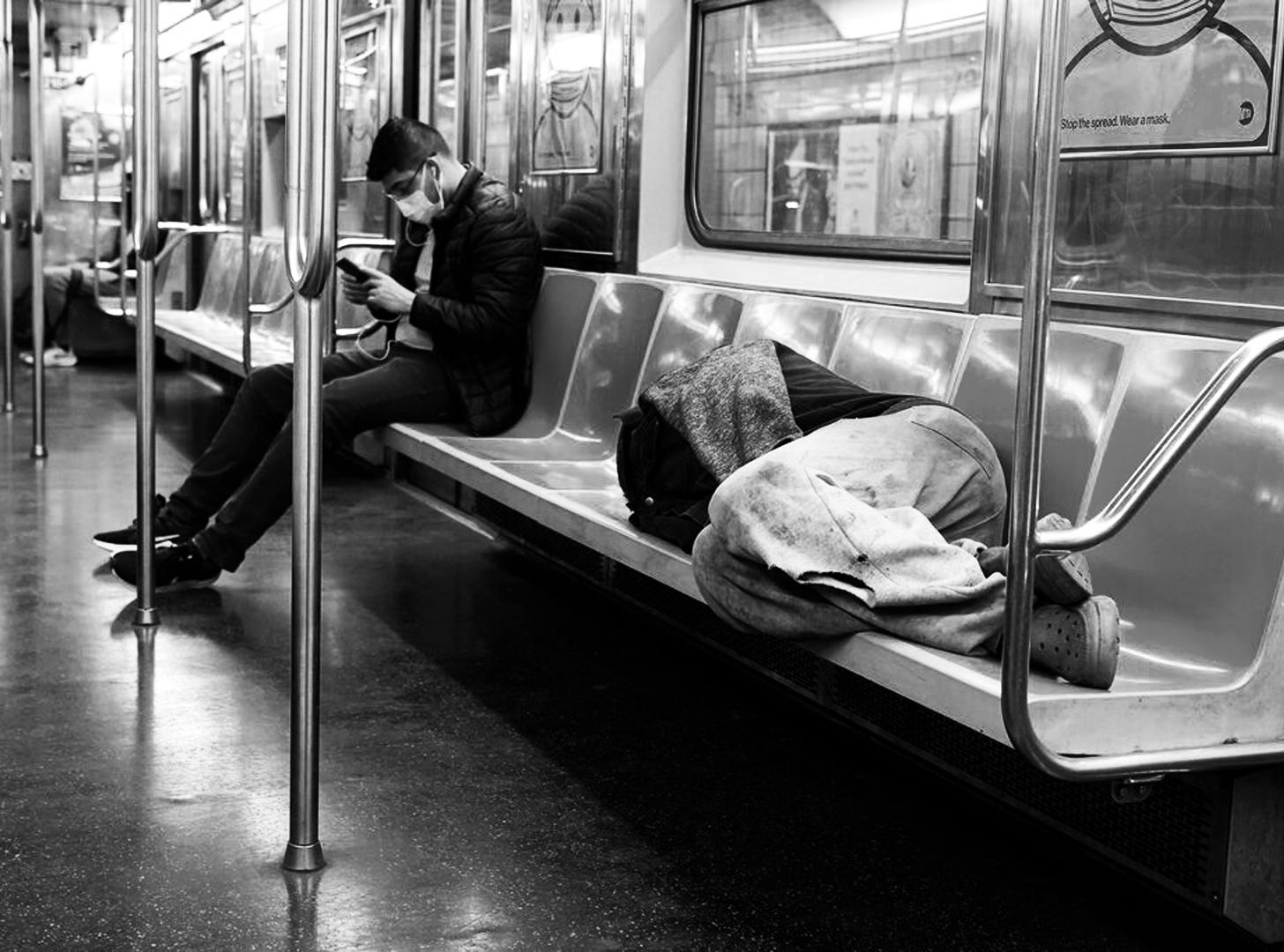
Since the days of Nixon, the right has aimed to paint American cities as war-torn ruins with nothing but dangerous disorder. Through this story, they aim to show the nation how, even with complete political control, Democrats are soft on safety and weak on crime. Those who live in our great cities know this to be false—that, by and large, our cities are safe and secure. We know, too, that those who perpetuate this narrative do not care about statistics and will not listen to our experiences. That, of course, is because their aim is not to promote policy recommendations or sway city leadership but to demonize the diversity that our urban areas so proudly hold. They want to tell Americans that it is impossible for those of different backgrounds and countries of birth to live, love, and work in one place. We know this not to be true.
We also know, though, that our cities have more work to do—and that we should not deny the real safety concerns that exist for working people. Even as violent crime has fallen steeply over the last two decades, our urban areas have become encumbered by the rise of homelessness and, by extension, public drug use and unpredictable mentally ill individuals. Americans in cities like San Francisco, Chicago, and New York have become accustomed to needles on the sidewalk and tents in parks. This is wrong, both for those sleeping on the street and those who briskly walk by. We can do more to make our cities not only look safe on graphs but feel safe on the streets, and we should.
To do this requires first acknowledging that this problem is both real and solvable. The Democratic Party cannot talk about prioritizing working people without protecting working people’s safety. Those without the fortune of Uber or a personal vehicle—the working people who make Sweetgreen bowls and vacuum office floors—are the ones who face the consequences of our inability to act. They are the ones taking the early-morning commuter trains into the city—the time when ridership is lowest and the number of individuals sleeping in cars is highest. Over 45% of subway riders in New York City said they felt safe on trains or in stations. Riders specifically identified quality-of-life problems and erratic behavior as major issues. This should be enough to show us that a few more social workers or another safe injection site is not the right way forward, practically or politically.
It is also, critically, not the right way forward for those who sleep or scream on these cars or on our streets. It is reprehensible to think that this is the best we can do as Americans for our fellow Americans. It is ridiculous to think that we are faced with either making homelessness a crime or losing our parks and playgrounds. We are not. Put simply, we should work to show the rest of America that in our best and biggest cities, we care enough to get you the help you need when you need it, and we are strong enough to prosecute crimes you commit if you commit them. You cannot have one without the other.
The working relationship between highly taxed areas and their taxpayers relies on a fundamental agreement that we pay more to get more: more parks, more services, and more safety. That relationship is breaking down, and it should be the first priority of Democratic leadership at the city, state, and federal levels to restore this balance. In practice, that means, before anything else, working to ensure an end to fare evasion. Fare evasion is the ultimate representation of how our rhetoric is not meeting reality—crippling our transit agencies and destroying a common sense of safety.
In New York, nearly one in ten subway riders were fare evaders, as were nearly half of all bus riders. Those stats are roughly the same across our major metro areas, like San Francisco’s BART and Boston’s MBTA. All three agencies are facing budgetary strains from lower post-pandemic ridership and higher fare evasion. Eliminating fare evasion will not eliminate the chance of dangerous or disorderly conduct on public transit, but it will help stop a small few from doing large damage. The MTA’s Blue-Ribbon Panel report, produced by an expert group created in 2022 to study fare and toll evasion across New York’s transit system, found that fare-evasion stops led to the recovery of loaded firearms and other dangerous weapons. The report also found that, even as a majority of fare evaders were not a threat, a meaningful minority of fare-evasion stops became criminal summonses.
Stopping fare evasion is not stopping the poorest from safely using public transportation. Indeed, it is poor working people in our cities who would benefit most from these individuals not stepping foot on transit at all. Safer public transit also means more full-fare riders who can help supplement reduced and eliminated fares for those who cannot pay. The world’s safest and most successful large transit systems generally do not operate as fare-free, enforcement-free spaces. After all, if it is good enough for Japan, Germany, and the Netherlands, it should be good enough for us.
Of course, a tattered American social safety net poses unique challenges that will demand specific solutions. Hiding poverty on our streets does not erase its strain on our nation’s beating heart—but that does not mean the status quo can continue. Those falling charts I wrote of earlier are only part of the story. Anyone who has visited or lived in a city knows what I am referencing: a man screaming outside a CVS, smoking inside public transportation, or following you for multiple blocks. These are not incidents serious enough to justify filing a police report or notifying authorities, but they do materially affect your view of what is and is not safe on our streets. This is why our cities can simultaneously be safer than at any point in our nation’s history while still feeling not safe enough.
To fix this, we should encourage city leaders to create a specialized municipal court track for repeat public-order violations. By empowering police and transit officers to issue civil-criminal summonses for things like public drug use, obstruction, trespassing, aggressive harassment, and more, we can rapidly expedite the ability to get unwell individuals the help they deserve. Critically, we must ensure that failure to appear for a summons does not mean a failure to receive consequences. Those who receive further public-order violations and whose records show a habit of missing court dates should receive the same treatment as anyone else: jail time.
By ensuring our sticks are as effective as our carrots, we can raise public willingness to help the vast majority of homeless people who are not violent or psychotic. Indeed, by going after this dangerous minority with convicted compassion, we can ensure not only the safety of the general public but also that of other homeless individuals who are otherwise most at risk. This is, to be clear, not a punishment for poverty. Indeed, our current system of letting men and women rot in the street is the real punishment. It is inhumane and incomprehensible to suggest that, in the wealthiest clusters of the wealthiest nation on Earth, the best we can do is provide “safe injection sites.” That is surrender, and it is wrong.
To this end, states must work to expand assisted outpatient treatment, psychiatric conservatorship, and civil commitment for people who repeatedly cycle through emergency rooms, jails, transit systems, and encampments. State legislatures should ensure this commitment has clear standards for behavioral incapacity, like repeated psychiatric holds, repeated arrests or summonses, repeated overdose reversals, inability to maintain basic safety, or persistent refusal of care while deteriorating. If someone repeatedly refuses outpatient treatment and meets a high clinical threshold, the court should be able to order a higher level of care via locked psychiatric treatment, mandatory medication review, residential dual-diagnosis treatment, or conservatorship. We will, of course, need to ensure that due process, periodic review, and independent medical evaluation all happen swiftly and sanely.
This approach is not without evidence. Proactive assisted outpatient treatment has been linked to substantial reductions in inpatient psychiatric hospitalization and hospital days. We also have reason to believe that this proactive approach leads to large reductions in arrests and jail days for participants. This is especially true of status quo responses like safe injection sites, which do not answer the public-order concerns created when visible drug use expands as narcotics enforcement is reduced.
Speaking of the status quo, we must be willing to recognize the practical and political failures of pure Housing First policies. Housing First policies have, undoubtedly, presented some successes in improving housing stability compared to usual services. But their benefits do not outweigh the practical and political implications of suggesting that there is public appetite to help those who repeatedly refuse treatment while continuing to endanger themselves or others. By instituting basic, common-sense mandates for housing options in conjunction with an expansion of said housing options and related treatment opportunities, we can ensure that compassionate conviction is realized on our streets.
We should begin by building a housing assistance program that encourages behavioral and lifestyle improvements and has no tolerance for violence or disorder. To do this, state and city governments should work together to create a tiered Recovery and Order First system.
The first and most basic tier, immediate shelter and navigation beds, should be open to anyone who will accept basic rules. Those rules must make clear that violence, open drug use or drug dealing, carrying weapons, and threatening staff are unacceptable to social service staff and the vast majority of homeless people who want a safe place to sleep. The second tier should include mandatory detox, medication-assisted treatment, psychiatric stabilization, or residential treatment for those who are homeless as a result of addiction or serious mental illness. The third and fourth tiers should incorporate existing infrastructure like halfway houses or supervised recovery housing with built-in guardrails like treatment compliance and work requirements.
One single paragraph cannot encapsulate what would be a lengthy process of legislation that can account for outliers and exceptions. If the goal of Housing First is to give those most disadvantaged in our communities a place to recover safely and securely, then a tiered system like the one above, or one like it, should be just as effective. We should want all of those on our streets to be in housing as soon as possible—and with a more balanced approach, this goal need not be a fantasy. We should also acknowledge the political goodwill we are sacrificing for a fraction of homeless individuals who refuse treatment in exchange for housing. In order to get working people to buy into yet another social investment in a problem that, in their eyes, has only gotten bigger as investments have grown, we must give them new ideas with fresh solutions.
It would be a mistake to look at these solutions through an ideological lens. It is neither moderate nor progressive to want our cities to be safe and our poor protected. The prophets of urban collapse have been wrong for decades. They were wrong when they said integration would destroy our cities. They were wrong when they said immigrants would make civic life impossible. They are wrong now when they say diversity and disorder are the same thing. We do not need, nor do we want, their hateful division that ignores the mechanisms of poverty and sees the poor as a nuisance to be swept away. We will prove to them, as we have for the last six decades, that our cities will not bow or break to their rhetoric—and that the places built by working people will once again work for those who live in them.
The point on transit fares in relation to safety is really interesting. I remember seeing a study about KCATA that said with the zero fare policy, 80% of residents surveyed said they felt more safe, and incidents per 100k fell 17%. I think fare enforcement in the first place is cause for a very large chunk of safety incidents in the first place.